On this page
What people mean by black mold
"Black mold" is an everyday name for dark mold growth. Several common molds look dark, and some look-alike growth is not mold at all, so color alone cannot identify a type. Only laboratory testing names it. For the removal plan, what matters most is how much growth there is and what moisture is feeding it, which an inspection establishes.
Dark growth usually appears on material that has stayed wet for some time: drywall paper, wood, the backs of paneling, and cardboard stored in damp spaces.
How is the extent confirmed?
- Inspection. The pro looks at where the growth is and what it is growing on.
- Moisture readings. Readings in the surrounding walls and floors show how far the water has spread, which often goes beyond the visible growth.
- Sampling where needed. A surface sample sent to a lab confirms the type. See mold testing in Decatur.
- A plan. The extent, the material involved and the moisture source decide how the work is set up.
Why does removal need containment?
Scraping or tearing out moldy material without containment spreads spores to rooms that were clean. Containment means sealing the work area, often with plastic sheeting, and controlling the air so particles stay inside. Removal happens inside that zone:
- Porous material with growth, such as drywall and insulation, is cut out and bagged rather than cleaned.
- Hard surfaces that can be saved are cleaned.
- The area is dried and the moisture source corrected.
- A final check confirms the area is dry and growth has not spread.
Where dark growth hides in Decatur homes
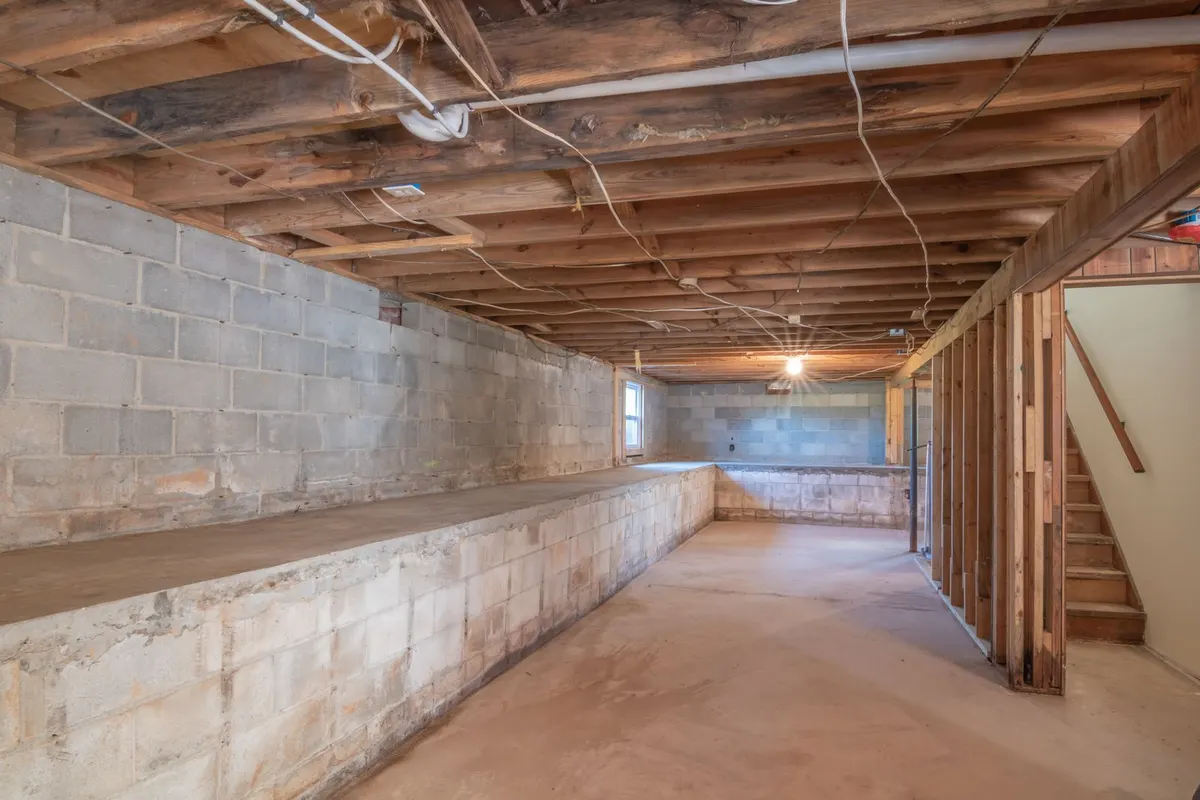
Over half the city of Decatur's housing was built before 1980. In older homes, dark growth tends to start where water has sat for a long time: on the back of basement paneling or drywall against a damp block wall, on floor framing above a wet crawl space, behind a vanity where a supply line weeps, and in ceilings under a slow roof leak. In apartment buildings it can start on your side of a wall shared with a neighbor's bathroom or kitchen.
Dark growth in rentals and apartments
About a quarter of Decatur's housing is in buildings of 50 or more units. In an apartment, dark growth on a shared wall, around a window or above a ceiling often has its source in the unit next door or above. Report it to the property manager in writing, with photos and dates, so the source can be traced across units. The pro's findings help show where the water is coming from.
Why it comes back after bleach
Spraying bleach on dark growth can lighten the surface while the moisture and the growth inside porous material stay. Within weeks the stain returns. Lasting removal means taking out porous material with growth, cleaning hard surfaces, drying the structure and fixing the water source.
Containment in a crawl space or basement
Dark growth below the floor needs the same care as growth in a living room. The pro isolates the work zone from the rooms above, seals vents and openings, and removes affected insulation and debris in sealed bags so nothing is carried through the house.
What a finished job looks like
- The affected material has been removed or cleaned inside a contained area.
- The moisture source has been found and corrected.
- The structure has been dried and readings are back in a normal range.
- No growth shows beyond the former work zone.
- You have a plain-English summary of what was done.
After the work is done
Keep the moisture under control so the growth does not return. Keep gutters clear, extend downspouts away from the foundation, run bathroom fans and keep indoor humidity within the EPA's suggested 30 to 60 percent range. Check the area again after the next heavy rain.
Is black mold dangerous?
This site does not give health advice. The EPA's guidance is that any indoor mold growth points to a moisture problem that should be corrected, and larger areas call for a professional working under containment. If anyone in the home has symptoms, speak with a doctor. Avoid sources that describe all dark mold as "toxic"; the type is confirmed by a lab, not by color.
Can you clean it yourself?
The EPA notes that homeowners can usually handle a small area, under about 10 square feet, on a hard surface. Dark growth often does not fit that picture. Call a pro when:
- the growth is on drywall, insulation, carpet or wood rather than tile or glass;
- the area is larger than a small patch;
- the growth followed a leak, flooding or a damp crawl space;
- it keeps returning after cleaning;
- anyone in the home has health concerns.
What to do before the pro arrives
- Do not scrape, scrub or spray dark growth; it releases spores.
- Keep the door to the room or basement closed.
- Stop the water source if you can do it safely.
- Keep children and pets out of the area.
- Take photos from a normal distance.
If you rent, tell your landlord in writing, with photos, so the source can be traced. Call (tracking number) to be connected with an independent local pro who removes dark growth under containment.
Related services in Decatur
Confirm the extent with a mold inspection and mold testing. For the full process, see mold remediation in Decatur. In 30033, see North Decatur.
Questions Decatur homeowners ask
How can I tell if it is black mold?
Color alone does not identify a mold type — several common molds look dark, and some look-alike growth is not mold at all. Only laboratory testing names the type. What matters for the plan is the extent of growth and its moisture source, which an inspection establishes.
Is black mold more dangerous than other mold?
This site does not give health advice. Any indoor mold growth points to a moisture problem that should be corrected, and larger areas call for a professional working under containment. If anyone in the home has symptoms, speak with a doctor.
Why does removal need containment?
Scraping or tearing out moldy material without containment spreads spores to rooms that were clean. The pro seals the work area first, removes the affected material inside the seal, and dries what remains — so the job ends the problem instead of moving it.